Stakeholders and materiality matrix
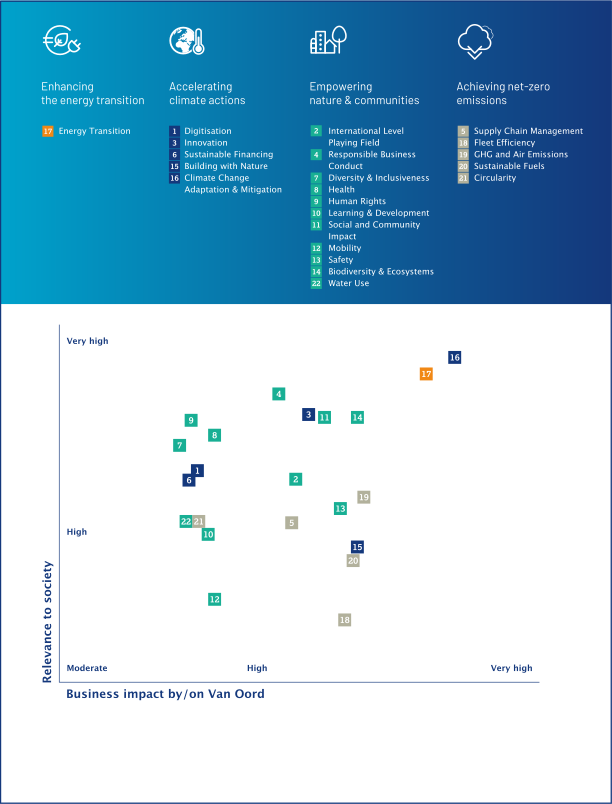
Van Oord performs materiality assessments to understand which economic, social and environmental themes are most important to our organisation and our stakeholders. We use the insights from these assessments to refine and guide the implementation of our strategy and environmental, social and governance (ESG) reporting and communication efforts.
Materiality assessment and stakeholders
To complete a materiality assessment, we survey internal and external stakeholders on the perceived relevance of selected sustainability topics. The external stakeholder group includes financiers, partners and coalitions, government bodies, clients, suppliers, shareholders, NGOs and research institutes. The internal stakeholder group is made up of employees representing different departments and varying levels of seniority. Over the years, we have refined the method and streamlined processes. Following the adoption of the Omnibus package by the European Commission in 2025, we will complete our double materiality assessment by 2026 to ensure compliant reporting under the Corporate Sustainability Reporting Directive (CSRD) as of 2027 onwards.
Priorities
The priority topics identified in the materiality assessment may change from year to year depending on world events, geopolitics, global trends, market developments, innovation, regulatory changes and societal attitudes. However, we have seen no indication that the 3 high-priority topics identified in our 2023 assessment have become any less material for Van Oord in 2025. These 3 topics are:
Climate Change Adaptation & Mitigation
Stakeholders viewed climate change as the world’s most challenging and urgent problem, and as an area where Van Oord’s climate adaptation and mitigation projects can have a substantial positive impact.
Energy Transition
Stakeholders expressed a sense of urgency with regards to the energy transition and energy independence in light of geopolitical developments. They viewed Van Oord as an important player in both the energy transition and the traditional energy sector.
Biodiversity & Ecosystems
Stakeholders expressed concern about the impact of human activity on the environment and biodiversity, and on the ecosystems on which we rely for food and other essential goods.
Value creation model
Van Oord’s value creation model visualises how we deliver long-term value for our clients, society and the environment. The model highlights the assets and resources that drive our business model and enable us to perform our activities. The value we create through those activities are the outputs. We have aligned the impact of our business model with key material topics and the UN’s Sustainable Development Goals (SDGs).
Materiality matrix