Sustainability
Our Sustainable Earth Actions (S.E.A.) programme guides our sustainability ambitions. Sustainability became more embedded across the organisation in 2025. Our focus has now shifted to driving action and impact across our sustainability pillars.
Enhancing the energy transition
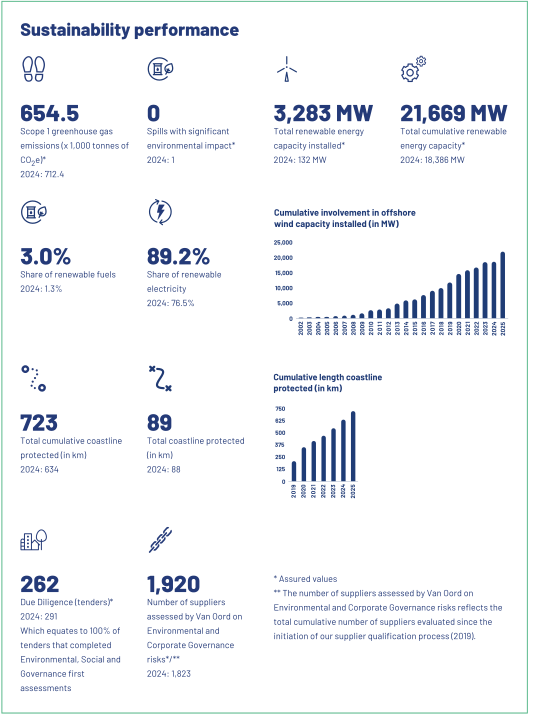
In 2025, we installed a total of 3,283 MW (2024: 132 MW). This included 1,400 MW as part of our monopile foundation and cable installation scope for the Sofia Offshore Wind Farm.
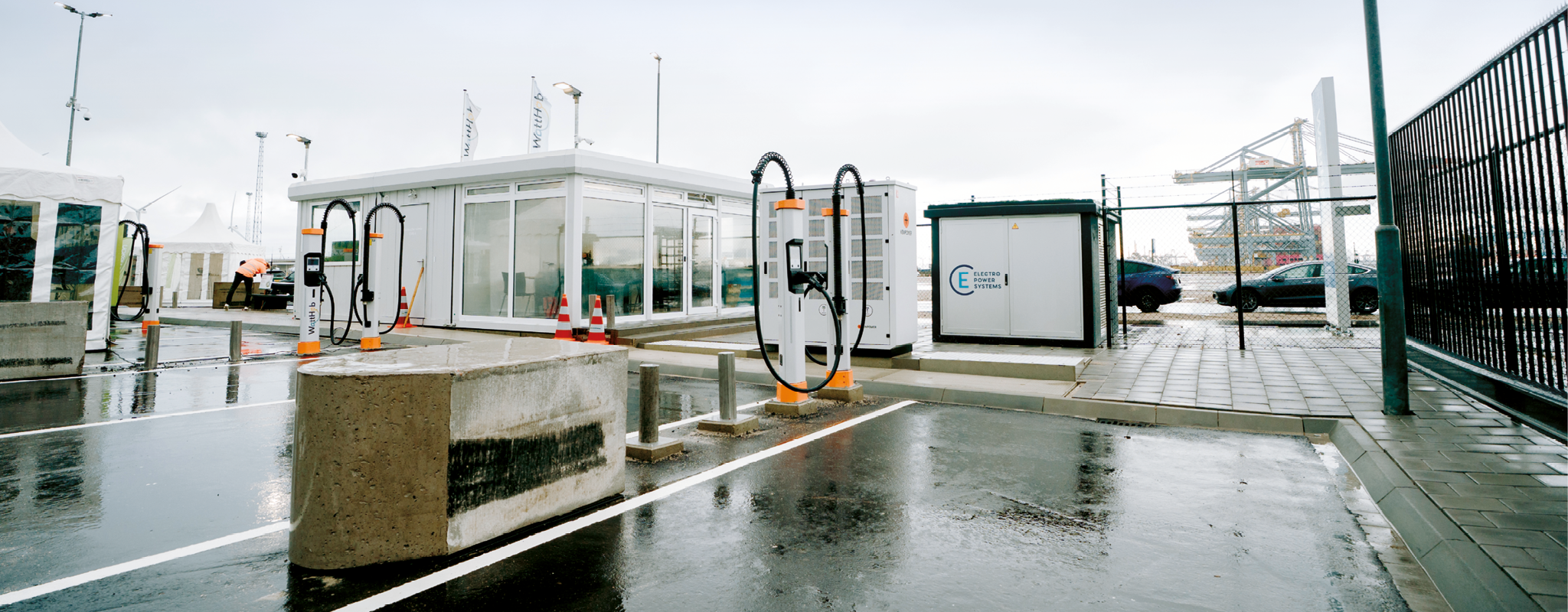
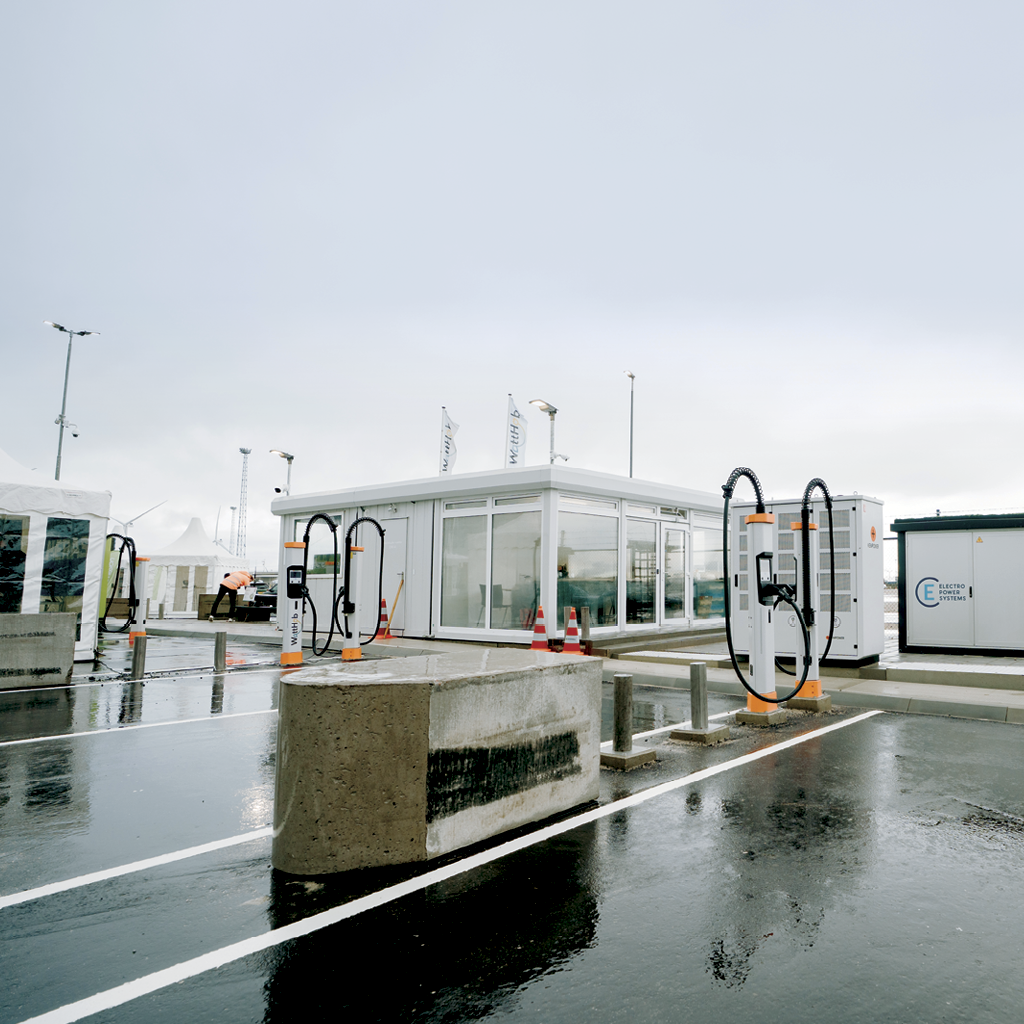
Our port expansion and infrastructure activities contribute to the energy transition in multiple ways, from natural gas infrastructure that enables the use of LNG as a transition fuel, to our charging solution WattHub. The second WattHub fast charging plaza opened at Maasvlakte II in Rotterdam, servicing both electric construction equipment and freight transport. This scalability is essential to our ambition of enhancing the energy transition.
Accelerating climate action
We deliver climate adaptation solutions to safeguard people and ecosystems against the impacts of climate change. In 2025, activities included dyke reinforcement, beach restoration, the construction of groynes, breakwaters and artificial reefs, and interventions such as seagrass rehabilitation. In 2025, we protected 89 kilometres of coastline. We use nature-based solutions to carry out our activities in an environmentally responsible way. For example, the IJsselmeerdijk dyke reinforcement project awarded in 2025 includes foreshore design with extensive nature development. For more information on our climate adaptation projects in 2025, please see the Dredging & Infra section.
As a member of the EcoShape network, we work to advance the application of Building with Nature. The Building with Nature III programme 2023−2027 includes topics such as biodiversity, the carbon cycle and climate-resilient landscapes. In 2025, Van Oord's involvement included the publication of a report on the role of nature-based solutions in ports, in collaboration with the World Bank.
Empowering nature and communities
We have a well-established due diligence approach to mitigate risks to people and ecosystems in all our projects. Under our Environmental, Social and Governance Due Diligence (ESG DD) process, we screen all tenders and establish ESG groups to systematically manage and mitigate risks for projects with a higher risk profile. In 2025, 15 ESG working groups were active.
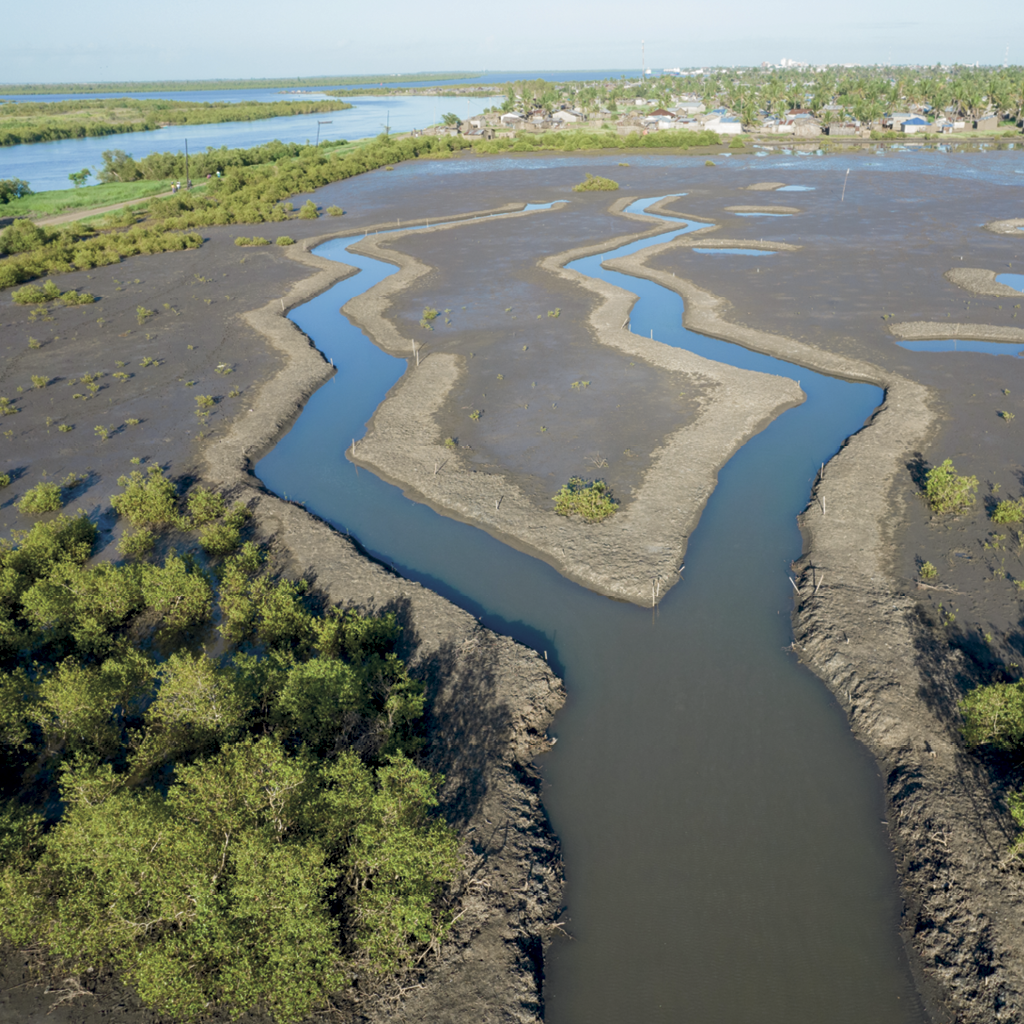
Various social investment and nature restoration initiatives were ongoing and completed in 2025. In Mozambique, we handed over the Quelimane Mangrove Restoration Initiative to the local community. The initiative aims to restore mangroves and its benefits, which includes climate change resilience, while addressing the root causes of mangrove degradation. In collaboration with local residents, local government and the nearby university, we developed a restoration programme the community can sustain independently. The initiative also aims to reduce economic reliance on the mangrove forest for charcoal and firewood by supporting the transition to alternative livelihoods.
SER International Responsible Business Conduct Agreement
As a participant in the SER IRBC (International Responsible Business Conduct) Renewable Energy Agreement, Van Oord has enhanced ESG supply chain due diligence, strengthened supplier risk categorisation and gone beyond the agreement’s focus on Dutch offshore wind projects. Each year, the SER assesses implementation maturity. In 2025, Van Oord's maturity score increased, demonstrating steady progress in embedding responsible business practices across its activities worldwide.
Achieving net-zero emissions
Van Oord is committed to achieving net-zero emissions by 2050, in line with the Paris Agreement goal of limiting global warming to 1.5°C. In May 2025, our science-based targets were officially approved by the Science Based Targets initiative (SBTi). Van Oord is the first marine contractor to receive SBTi approval for science-based targets aligned with a 1.5°C-degree pathway.
Climate transition plan
Our climate transition plan encompasses near-, mid- and long-term targets and measures for achieving our net-zero ambition. Measures include:
-
Implement a fleet renewal programme to phase out older, less efficient and single-fuel vessels.
-
Retrofit existing vessels to improve energy efficiency and enable the use of renewable fuels.
-
Invest in electrification and renewable fuels for inland waterway vessels and dry earth moving equipment.
-
Leverage the Green Fuel Fund to incentivise the adoption of renewable fuels throughout our value chain.
-
Work with suppliers to monitor emissions and implement tailored reduction strategies through the Sustainable Supply Chain programme.
-
Increase sourcing of renewable electricity through on-site generation with solar panels and by procuring renewable electricity certificates for remaining electricity needs.
Fuel (scope 1 & scope 3 category 3) progress
In 2025, our fuel-related emissions decreased compared with 2024. This is in part attributed to the higher uptake of renewable fuels. Total fuel-related emissions exceeded our target by 96 kt of CO2e, a significantly lower overshoot compared with 2024.
Our renewable fuel share increased from 1.3% in 2024 to 3.0% in 2025. This was achieved largely due to the Green Fuel Fund, which came into full effect in 2025. As a financial mechanism we deploy, together with our value chain partners, it helped overcome the challenges surrounding the cost of renewable fuels. In comparison, between 2023 and 2024, the share of renewable fuels increased only slightly, from 1.1% to 1.3%. Various projects from both business units ran on renewable fuel in 2025, with a particular increase in renewable fuel bunkering outside of the Netherlands. In 2025, we leveraged the Green Fuel Fund to use renewable fuels for the execution of the Windanker monopile installation project in the Baltic Sea, among other projects. Trailing suction hopper dredger Vox Ariane completed its first bunkering of Bio-LNG on the Elbe River in Germany.
Electricity (scope 2) progress
We achieved our short-term climate target for scope 2 emissions, exceeding 80% renewable electricity consumption. By the end of 2025, the share of renewable electricity had reached 89% compared with 76.5% in 2024. This increase was in part the result of the installation of solar panels and battery systems at our yards in Ras al Khaimah (United Arab Emirates) and Batam (Indonesia). Our near-term target is to source 100% renewable electricity by 2030.
Supply chain (non-fuel upstream scope 3) progress
Our upstream scope 3 emissions slightly increased compared with 2024, mainly due to the delivery of newbuild vessel Boreas. Against our 2023 baseline, our scope 3 emissions have decreased, and we remain on track to achieve our near-term target. Van Oord has been participant in the Carbon Disclosure Project (CDP) since 2020. In 2025, we were recognised on the A-list of CDP’s Supplier Engagement Assessment (SEA), becoming the first dredging and marine contractor to achieve this distinction. By focusing on the right suppliers, we aim to reduce our non-fuel upstream scope 3 emissions in line with our science-based targets. Supplier engagement increased in 2025, with 70.8% of invited suppliers participating in our CDP Supply Chain Programme on climate change. This provided further insight into our supply chain emissions and opportunities for reduction.
For a detailed breakdown of our energy consumption, greenhouse gas emissions and other emissions, please refer to the Energy and emissions performance section.
Ocean Health
In 2025, a dedicated director was brought on to lead Ocean Health. With Ocean Health becoming a standalone business line in 2025, this new role underlines our marine ecosystem restoration ambitions. The next phase of Ocean Health is about achieving restoration at scale and maximising impact. An example in 2025 was the restoration of seagrass in Scotland to support marine species and enhance biodiversity. The pilot tested whether dredging operations could support seagrass restoration. Using a sand capping technique, dredged sediments were mixed with seagrass seeds and applied to degraded seafloor, creating conditions for seagrass to establish and thrive. Initial results show strong potential for large-scale restoration.
COP30
At the 30th Conference of Parties (COP30) in Belém, Brazil, Van Oord hosted events in the Blue Zone (Ocean Pavilion and Water for Climate Pavilion) and participated in various sessions, demonstrating leadership in coastal resilience, offshore energy, nature-based solutions, sustainable marine infrastructure and ocean health.
Sustainability Advisory Board
The Sustainability Advisory Board of external and independent experts advises the Executive Committee on sustainability-related matters. The board held 4 meetings in 2025. Key topics included navigating the offshore wind industry in the Netherlands and Europe, progress on ESG Due Diligence and CSRD implementation, the Ocean Health strategy and net-zero emissions roadmap. At year-end, the board comprised Ms Marjolein Demmers, Ms Marilou Goldstein-Brouwers, Mr Johan van de Gronden and Mr Diederik Samsom.
Outlook
As we enter the final year of the 3-year sustainability programme, our focus will be on implementation and impact. We will embed sustainability into our business operations, ensuring it drives business value while mitigating negative impacts and delivering positive value. The development of a biodiversity roadmap is a priority for CSRD compliance and remains ongoing.
Planet figures